
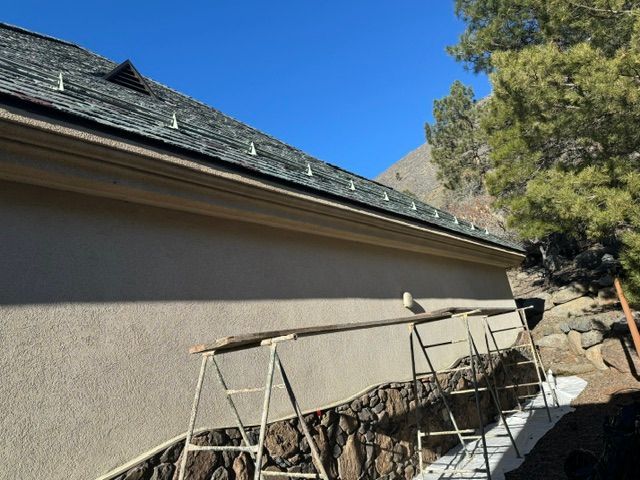
Exteriors Built to Handle Desert Conditions
Exterior Stucco Installation & Repair in Sun Valley for residential and commercial buildings facing UV exposure, temperature swings, and wind-driven dust
Walls develop hairline cracks, discolored patches, or hollow-sounding sections when stucco separates from underlying lath or when moisture penetrates through failed sealant joints. Exclusive JD Stucco & Drywall LLC addresses these failures through crack repair services and stucco restoration that re-establishes the weather-resistant envelope around Sun Valley buildings. Exterior stucco applications involve multiple bonded layers that flex with structural movement while blocking water infiltration, a critical function in climates where afternoon temperatures can shift forty degrees from morning lows.
New installations apply wire lath over weather-resistant barriers, followed by scratch coat, brown coat, and finish coat sequences that build thickness gradually to prevent shrinkage cracking, with each layer curing before the next goes on. Repair work requires cutting back to sound material, re-lath patching, and blending new stucco into existing textures so the repair becomes invisible once painted. Weather-resistant finishes include elastomeric coatings or acrylic systems that seal the surface while allowing vapor transmission, which prevents moisture from becoming trapped inside wall assemblies.
Arrange an exterior assessment to identify areas where stucco has lost bond or where cracks indicate underlying movement that requires structural attention before cosmetic repair.

What Proper Stucco Systems Prevent Long-Term
Residential exteriors and commercial stucco projects both depend on proper flashing integration at roof lines, window penetrations, and grade transitions, since water entry at these junctions causes the majority of stucco failures rather than surface cracks alone. The three-coat system creates a monolithic shell that distributes stress across the entire wall rather than concentrating it at weak points, and control joints placed at deliberate intervals allow planned movement instead of random cracking. Stucco restoration often reveals that previous repairs failed because they addressed surface symptoms without correcting the flashing or drainage issues that caused the original damage.
After installation or repair completes, you see uniform color and texture across treated areas, with no visible patch lines or shade variations that indicate rushed curing or mismatched materials. The surface sheds water immediately during rain rather than absorbing it, and tapping the wall produces a solid sound instead of the hollow thud that signals delamination. Properly finished stucco accepts paint evenly and maintains its texture pattern for decades without sloughing or spalling, even on south and west exposures that receive intense UV radiation throughout Sun Valley's long summer season.
Commercial projects often include color-matched integral finishes that eliminate the need for paint, while residential work typically uses traditional gray stucco finished with elastomeric coatings in custom colors. Both approaches require curing time before final coats go on, and installation schedules account for temperature limits since stucco cannot be applied when ambient conditions fall below forty degrees or when direct sun would cause surface crusting before the material hydrates fully.
Answers to Frequent Service Questions
Exterior work in Sun Valley's high desert environment raises specific concerns about material performance, crack patterns, and how restoration work integrates with existing finishes.
How do you match existing stucco texture during repair projects?
Texture matching requires analyzing the original application pattern, aggregate size, and trowel technique, then replicating those variables in sample patches that cure and dry to confirm color match before applying repair material to visible areas.
What causes vertical cracks at window corners in stucco walls?
Stress concentrations at window openings create predictable crack patterns when the stucco system lacks adequate reinforcing mesh at corners or when window flashing allows water infiltration that degrades the scratch coat bond, both of which require structural repair rather than surface filling.
Why does stucco in Sun Valley require different installation timing than humid climates?
Rapid moisture evaporation in low-humidity conditions can prevent proper cement hydration if application happens during peak afternoon heat, so installation typically occurs in early morning or evening hours when temperatures moderate and the material retains workable moisture longer.
When should exterior stucco be sealed after new installation?
Sealing happens after the finish coat fully cures, typically thirty days post-application, since premature sealing traps residual moisture that can cause efflorescence or bond failure as trapped water seeks escape routes through the uncured material.
How do weather-resistant finishes perform differently than standard paint on stucco?
Elastomeric coatings bridge hairline cracks through elastic elongation and create thicker film builds that block water penetration better than latex paint, but they also cost more per gallon and require specific surface preparation to achieve proper adhesion on aged stucco.
Exclusive JD Stucco & Drywall LLC inspects your building envelope to identify not just visible damage but the underlying causes that must be corrected for repairs to last. Schedule a property evaluation to document current conditions and discuss whether restoration or full replacement makes sense for your situation.