
Ceilings Updated and Rooms Quieted
Popcorn Ceiling Removal & Wall Soundproofing in Sun Valley for residential spaces requiring modern finishes and commercial facilities needing noise control between occupied areas
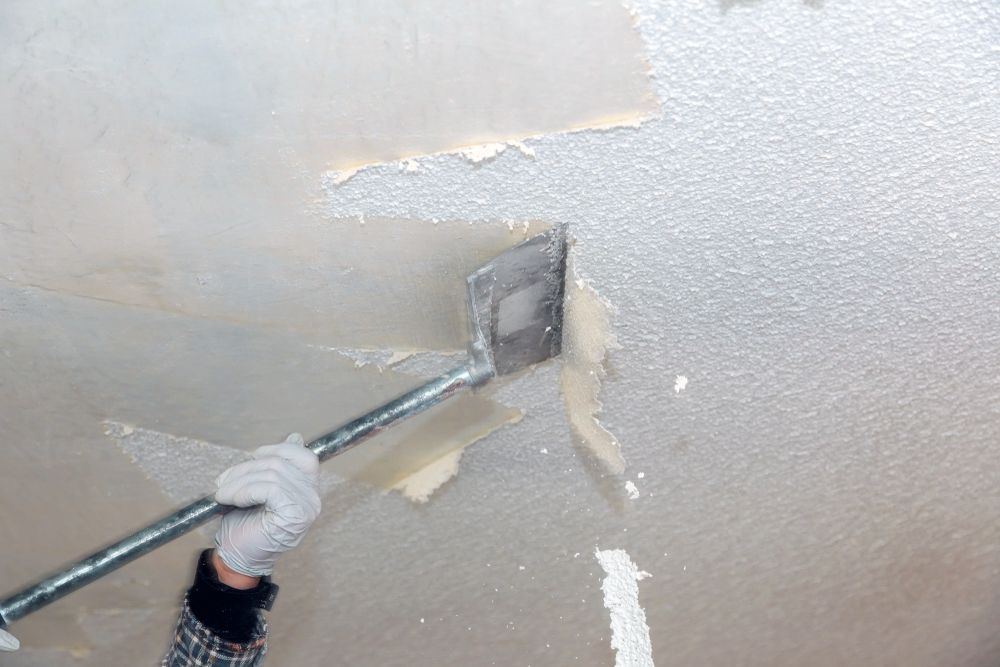
Popcorn ceiling texture catches dust, creates cleaning difficulties, and marks homes as outdated the moment prospective buyers or tenants look up. Removing this texture involves scraping the material after softening it with controlled moisture application, then refinishing the ceiling surface to smooth or lightly textured modern standards that accept paint cleanly. Exclusive JD Stucco & Drywall LLC handles ceiling refinishing projects throughout Sun Valley residential applications where homeowners prepare properties for sale or simply want contemporary interiors. Soundproof wall systems address noise transmission in attached housing, home offices, media rooms, and commercial spaces where privacy or sound isolation affects usability.
The removal process protects floors and furnishings with layered coverings, softens the popcorn texture without over-saturating drywall underneath, scrapes the material down to the original ceiling surface, and refinishes with joint compound applications that create the desired final texture. Testing for asbestos happens before any scraping begins on ceilings installed before the mid-1980s, since many popcorn textures from that era contain asbestos fibers requiring specialized abatement rather than standard removal. Soundproof wall systems use resilient channels, sound-damping panels, insulation designed for acoustic absorption, and multiple drywall layers to block sound transmission through shared walls.
Arrange a ceiling evaluation to determine whether your popcorn texture requires testing and to review finish options that suit your space and budget.

What Proper Ceiling Systems Require
Ceiling refinishing exposes any underlying drywall defects that the popcorn texture previously concealed, including fastener pops, seam ridges, or surface irregularities that require correction before final finishing. The scraping removes texture but leaves a slightly rough surface that needs skim coating or retexturing to achieve smooth or knockdown finishes. Residential applications often include coordinating removal across multiple rooms to maintain finish consistency, and projects sometimes reveal that older ceilings sag between joists, requiring re-fastening or sistering before refinishing makes sense. Ceiling work generates significant dust and debris despite moisture application, so containment and cleanup form essential parts of the process.
After removal and refinishing complete, ceilings appear flat and uniform without the shadowed texture that characterized popcorn surfaces, and they accept paint in smooth, even coats that make rooms feel taller and cleaner. You notice that ceiling-mounted fixtures and fans install more cleanly without texture interference, and future painting becomes simpler since smooth ceilings require less paint and show brush or roller marks less readily than textured surfaces. Soundproof wall systems reduce noise transmission measurably, with properly installed assemblies cutting sound transfer by twenty to thirty decibels depending on construction methods, which turns clearly audible conversations into muffled background noise.
Noise reduction solutions work by decoupling wall surfaces from framing so that vibrations do not travel directly through studs, and by adding mass and absorption layers that block and absorb sound energy. Commercial sound control projects often involve building code requirements for Sound Transmission Class ratings in multi-tenant buildings, specifications that dictate assembly construction and require testing verification in some jurisdictions.
Questions Before Starting Your Project
Ceiling texture removal and soundproofing installations involve process details and outcome expectations that warrant clarification before work begins.
What determines whether popcorn ceiling removal requires asbestos testing?
Any ceiling texture applied before 1980 should be tested since asbestos was commonly used in spray-applied textures during that period, and scraping asbestos-containing material without proper containment and disposal creates serious health hazards that standard removal methods do not address.
How do you refinish ceilings after popcorn removal without visible seams or texture breaks?
Skim coating applies thin layers of joint compound across the entire ceiling surface to fill minor irregularities and create a uniform base for final texture or smooth finishing, with each coat sanded lightly and the final surface primed before painting to ensure even color and sheen.
Why do soundproof wall systems cost significantly more than standard drywall installation?
Effective sound control requires specialized materials including resilient channels that isolate drywall from framing, acoustic insulation that absorbs sound energy, sound-damping panels that add mass without adding thickness, and often double-layer drywall with staggered seams, all of which increase both material and labor costs substantially.
When does soundproofing an existing wall make sense versus living with current noise levels?
Soundproofing existing walls requires either removing one surface to add isolation and insulation or building a second wall inside the room that reduces floor space, so the decision depends on how significantly noise affects comfort or function and whether the space can accommodate reduced dimensions.
How effective are soundproof wall systems at blocking noise in Sun Valley residential applications?
Properly constructed soundproof assemblies significantly reduce airborne sound transmission like voices and television audio, but they do not eliminate low-frequency vibration noise from impacts or subwoofers, which require additional floor and ceiling isolation to control effectively.
Exclusive JD Stucco & Drywall LLC discusses your ceiling condition and acoustic goals to recommend solutions that deliver meaningful improvements within your project constraints. Schedule a consultation to review what removal or soundproofing work will involve and what results you should expect in your specific situation.